

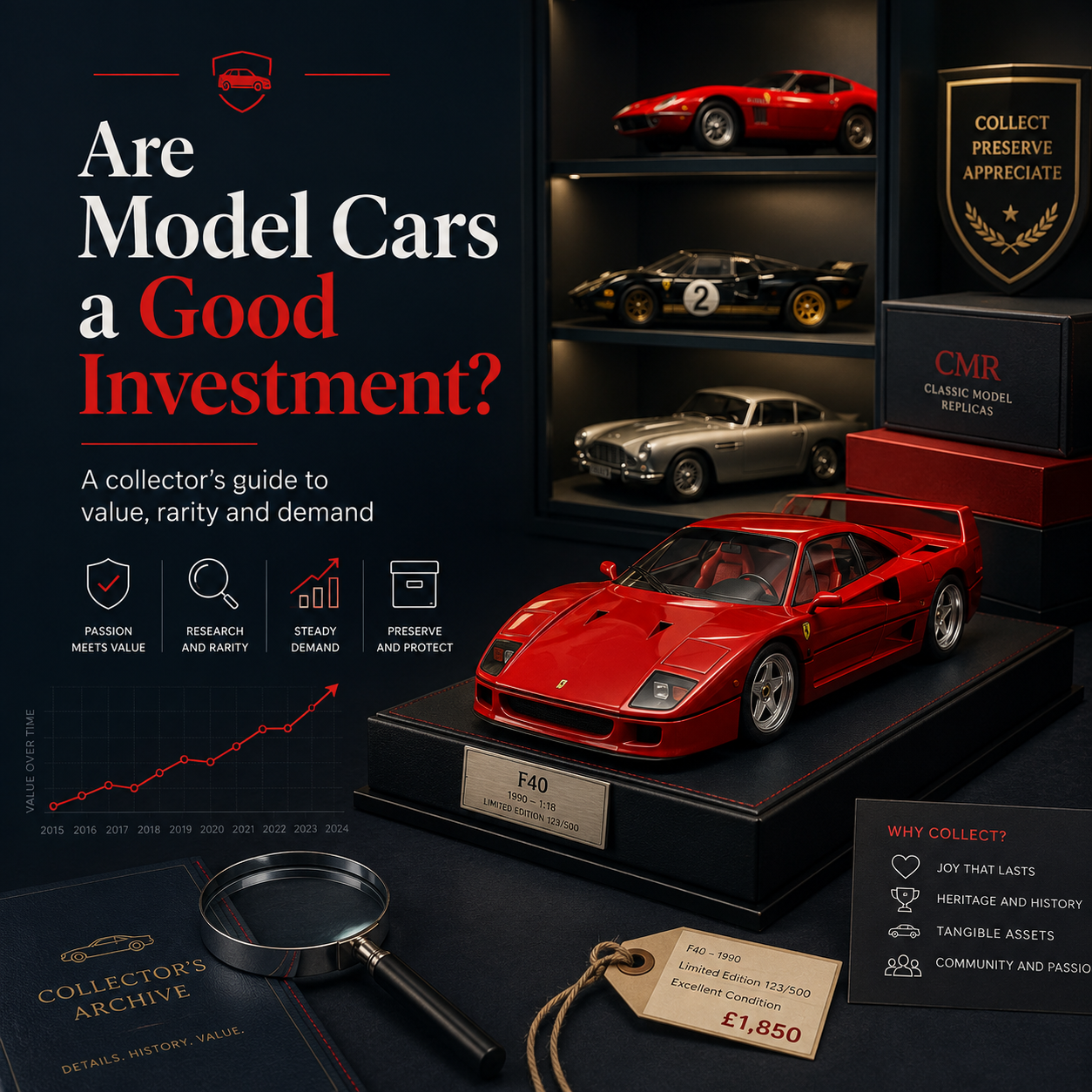
Collecting model cars can be an enjoyable way to celebrate automotive history, motorsport, design and engineering. For most collectors, the main reward comes from owning and displaying models that reflect their personal interests.
Some models also become more valuable over time, particularly when they are scarce, discontinued or connected to a popular vehicle. This can lead collectors to ask whether model cars should be considered a financial investment as well as a hobby.
The honest answer is that certain models may increase in value, but this is never guaranteed. Model collecting is generally best approached as an enjoyable hobby with the possibility of preserving or increasing some of the money spent, rather than as a dependable investment strategy.
Collector tip: Buy models that you would still be pleased to own even if their resale value never increases.
Why Do People Collect Model Cars?
Collectors are drawn to model vehicles for many different reasons. A collection may focus on:
- A particular manufacturer or vehicle marque
- Formula One, rallying or endurance racing
- Classic, performance or road cars
- Vehicles owned by the collector or their family
- A particular decade or period of automotive history
- A preferred scale, manufacturer or type of model
Models can also offer a practical way to enjoy vehicles that would be impossible to own at full size. A collector may be able to display a history of Ferrari, Porsche or Formula One cars within a single cabinet.
This personal and historical appeal is usually the strongest reason to collect. Any future increase in value should normally be viewed as an additional benefit rather than the main purpose.
Can Model Cars Increase in Value?
Yes, some model cars become worth more than their original retail price. This commonly happens when supply becomes limited while collector demand remains strong.
However, not every discontinued or limited model becomes valuable. Some models remain available for years, while others are reissued in a similar specification or lose popularity as collecting trends change.
A higher asking price also does not necessarily mean that a model is selling at that amount. Completed sales usually provide a more useful indication of market value than unsold listings.
What Can Make a Model More Valuable?
Rarity and Availability
Models produced in smaller quantities may become harder to find once retailers and distributors sell through their stock.
Scarcity alone is not enough, though. A rare model needs sufficient demand from collectors before its price is likely to rise.
Models can become scarce because they were:
- Produced as a limited edition
- Made exclusively for a particular market or retailer
- Available for only a short period
- Based on an unusual vehicle or livery
- Discontinued by the manufacturer
- Produced by a brand that later ceased trading
Collector Demand
Demand is one of the most important factors affecting resale value.
A model may attract particularly strong interest if it represents:
- A well-known road or racing car
- A championship-winning vehicle
- A celebrated driver or team
- A popular classic car
- A cult television or film vehicle
- A desirable colour or specification
- A vehicle with a dedicated enthusiast following
A model connected to a popular subject is generally easier to resell than an equally rare model with very limited collector interest.
Condition
Condition can have a major effect on the price a collector is willing to pay.
Potential buyers may check for:
- Paint damage or marks
- Missing mirrors, aerials or other parts
- Loose or damaged components
- Cloudy or scratched display covers
- Tyre or wheel problems
- Discolouration caused by sunlight
- Damage to the display base
- Alterations or repairs
Models with delicate resin, photo-etched or plastic parts may require particularly careful handling.
Original Packaging
Original packaging can add value and make a model easier to sell.
This may include:
- The outer cardboard box
- The display base and acrylic cover
- Inner polystyrene or protective packaging
- Manufacturer paperwork
- Certificates or numbered edition cards
- Accessories supplied with the model
Packaging does not always need to be perfect, especially on older models, but serious damage or missing inserts may reduce buyer interest.
It is sensible to retain packaging even when a model is permanently displayed, as it also provides the safest way to store or transport the model later.
Manufacturer and Quality
Some manufacturers have stronger collector followings than others. This may be due to their reputation, subject choices, production quality or the fact that their models were made in limited quantities.
However, brand name alone does not guarantee appreciation. A widely available model from a premium manufacturer may remain close to its original price, while a modestly priced model of an unusually popular subject may become difficult to obtain.
Collectors should consider the individual model, not simply the name printed on the box.
Scale
No single scale is automatically the best for value.
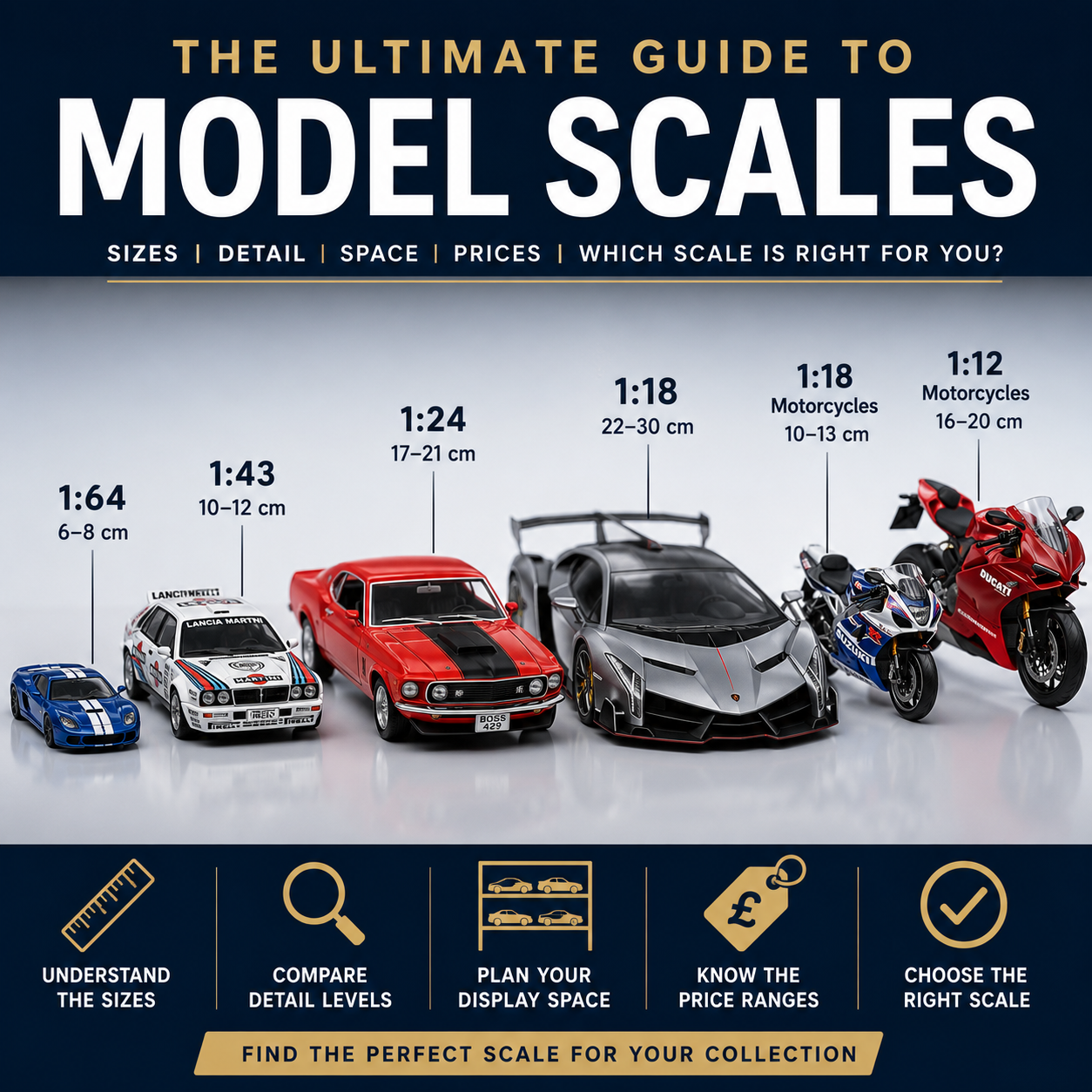
Popular collector scales such as 1:18, 1:43 and 1:64 each have active markets. The strongest scale may depend on the subject:
- Formula One and rally collections are particularly well represented in 1:43
- Premium road and supercar models are popular in 1:18
- Modern performance, tuning and Japanese vehicles have strong followings in 1:64
- Motorcycles are commonly collected in 1:12 and 1:18
Demand within the scale matters more than physical size alone.
Historical and Cultural Significance
Models connected to significant events may retain long-term collector appeal.
Examples could include:
- A first or final race victory
- A championship-winning season
- A significant road-car launch
- A famous rally or endurance event
- A vehicle associated with a notable driver
- A car that became an important part of popular culture
Even then, value depends on the quality of the model, production quantity and the number of collectors seeking it.
Limited Edition Does Not Always Mean Valuable
The phrase “limited edition” can be misleading when assessing potential value.
A model may technically be limited, but the production quantity could still be large enough to satisfy collector demand for many years. Some numbered editions are also produced in several colours or variations, increasing the overall number of similar models available.
Before paying a premium, consider:
- The actual production quantity
- Whether the model is already difficult to obtain
- How popular the subject is
- Whether similar versions are available
- Whether the manufacturer regularly reissues related models
A model being described as limited should not be the only reason for purchasing it.
Why Model Cars Are Not a Conventional Investment
Unlike savings accounts, bonds or shares, model cars do not produce interest, dividends or income simply by being owned.
There are also several costs and risks to consider:
- Retail and delivery costs when purchasing
- Storage and display costs
- Risk of accidental damage
- Fading, deterioration or packaging wear
- Selling fees and payment charges
- Packaging and postage when reselling
- The time required to photograph, list and sell each item
- The possibility that demand may fall
A model may need to increase substantially in price before the owner makes a genuine profit after these costs are considered.
Collections can also take time to sell. A specialist model may achieve a good price eventually, but only after waiting for the right buyer.
Asking Prices Versus Selling Prices
Online marketplaces often contain models advertised at very high prices. These listings can create the impression that a model is worth more than buyers are actually willing to pay.
When researching value, look for:
- Completed or sold listings
- Recent auction results
- The condition of the model sold
- Whether the packaging was included
- The total price including delivery
- How frequently the model actually sells
One unusually high sale does not necessarily establish the normal market value. Comparing several recent sales gives a more reliable picture.
Should You Keep Models Sealed?
Some collectors prefer never to remove a model from its packaging, believing this will maximise its future value.
This may help in some areas of collecting, particularly where sealed packaging is important to buyers. However, many collector models are designed to be displayed and may not have a factory seal in the same way as toys or trading products.
For most scale models, the important considerations are:
- The model remains complete and undamaged
- The original packaging is retained
- Any securing screws, straps or accessories are kept
- The model has not been permanently altered
- The packaging has been stored carefully
There is little benefit in owning a model purely for future value if doing so prevents you from enjoying it.
New Models Versus Pre-Owned Models
Buying new gives the collector greater confidence about condition, completeness and provenance. It also provides the opportunity to secure a model before it becomes difficult to find.
Pre-owned models can sometimes offer better value, especially when:
- The model has been carefully displayed
- The original packaging is present
- The seller has provided clear photographs
- The model is no longer available through retailers
- The asking price reflects minor packaging wear
However, pre-owned buyers should inspect descriptions and photographs carefully. Repairs, missing parts, sunlight damage and deteriorating tyres may not always be immediately obvious.
How to Protect the Value of a Collection
Keep the Packaging
Store boxes, inserts, certificates and accessories in a dry location. Avoid placing heavy items on top of model packaging, as this can crush the box or acrylic cover.
Avoid Direct Sunlight
Prolonged sunlight can fade paint, decals, interiors and packaging. Display cabinets should ideally be positioned away from strong direct light.
Control Dust and Humidity
Display cases help protect models from dust and accidental handling. Avoid damp garages, lofts or outbuildings where temperature and humidity may vary considerably.
Handle Models Carefully
Lift models by the base or strongest parts. Avoid using mirrors, wings, aerials or other delicate components as handling points.
Keep Records
A simple collection record can include:
- Manufacturer and model description
- Scale
- Product or edition number
- Date purchased
- Price paid
- Current condition
- Storage location
- Photographs
This can be useful for insurance, resale and general collection management.
Buying Models with Resale Value in Mind
Collectors who want to remain mindful of future value can follow a few sensible principles.
Buy Subjects with Established Demand
Vehicles with strong enthusiast followings may be easier to resell. However, popular subjects can also be produced by many manufacturers, so availability should be considered alongside demand.
Do Not Overpay Because of Hype
A newly sold-out model may temporarily attract inflated asking prices. Demand can settle once the initial excitement passes or additional stock appears.
Research Previous Releases
Looking at how earlier models from the same range have performed can provide useful context, although it cannot predict future value.
Consider the Total Purchase Cost
Include delivery charges and any other costs when deciding whether the price is reasonable.
Choose Quality Over Quantity
A smaller collection of carefully selected models may be easier to store, maintain and eventually sell than a large collection purchased without a clear focus.
When Might It Be Sensible to Sell?
There is no perfect time to sell a collectable model.
A collector may decide to sell when:
- The model no longer fits the direction of the collection
- Display or storage space is limited
- Demand is unusually strong
- The owner wishes to fund another purchase
- A similar or improved model has been released
- The collection needs to be reduced or reorganised
Waiting indefinitely for a higher price can be risky. Demand may fall, another manufacturer may release the same subject or the condition may deteriorate during storage.
Collecting for Enjoyment Versus Collecting for Profit
Collectors who buy primarily for enjoyment are less dependent on future market prices. The model delivers value through ownership, display and connection to the real vehicle.
Buying purely for profit can change the nature of the hobby. It may encourage purchasing models that hold little personal interest, keeping them packed away and worrying about every small change in market value.
A balanced approach is often more rewarding:
- Choose models that genuinely interest you
- Pay a price you consider reasonable
- Look after the model and its packaging
- Remain aware of the resale market
- Treat any future increase in value as a bonus
Frequently Asked Questions
Do all limited-edition models increase in value?
No. A limited production run does not guarantee strong demand or a higher resale price.
Are resin models more valuable than diecast models?
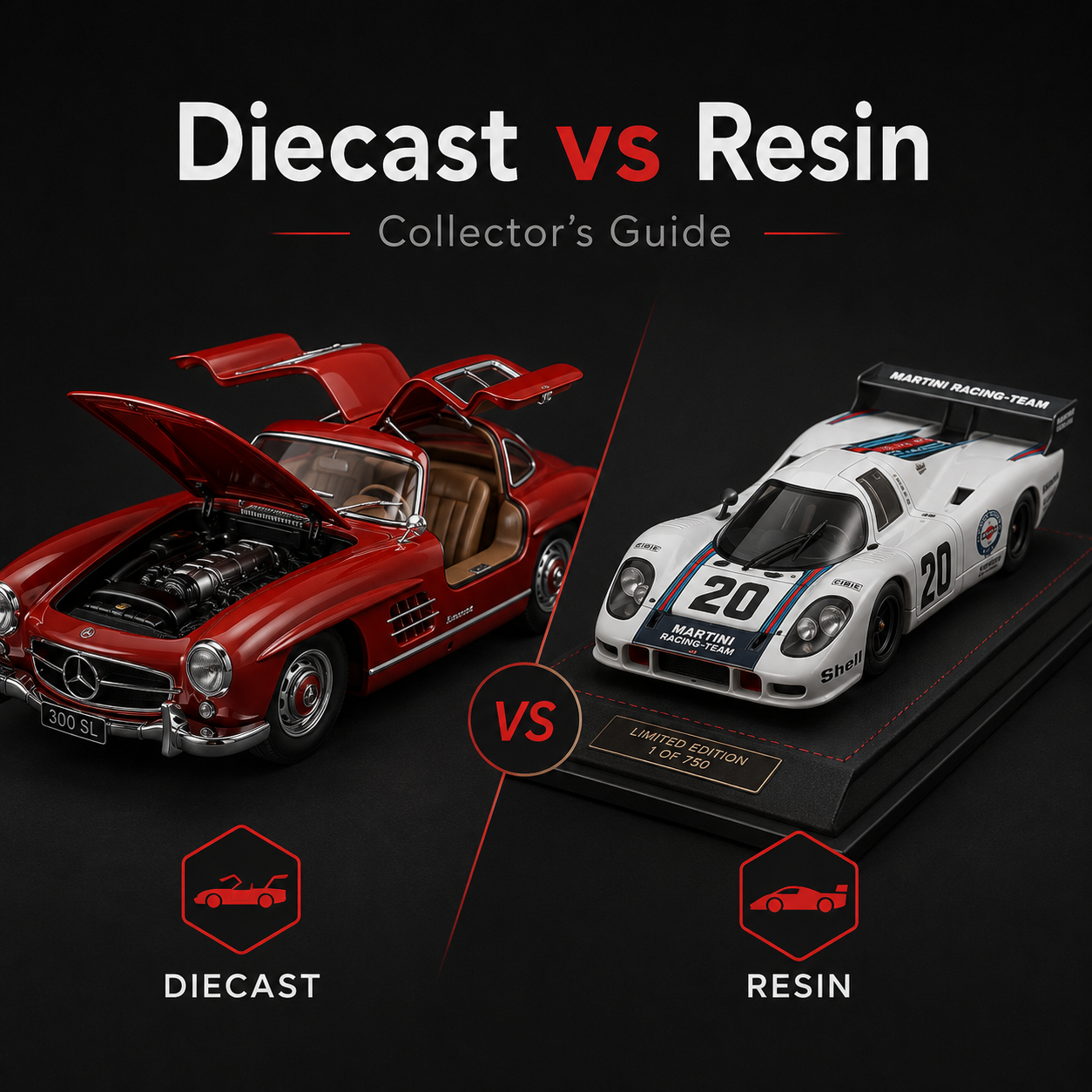
Not automatically. Resin models are often produced in smaller quantities and may offer highly accurate body shapes, but value still depends on the subject, manufacturer, condition and demand.
Are larger models a better investment?
No particular scale is guaranteed to perform better. Popularity within the chosen scale is more important than size alone.
Does damaged packaging reduce the value?
It can, particularly for rare or premium models. The effect depends on the severity of the damage and how important packaging is to buyers of that particular model.
Should I buy two models and keep one boxed?
This is a personal choice rather than a reliable investment strategy. Buying duplicates increases the amount of money and storage space committed to an uncertain future resale market.
How can I find out what my model is worth?
Compare recent completed sales for the same model in similar condition. Check the manufacturer, scale, product number, colour, edition and packaging carefully to ensure the comparison is accurate.
Final Thoughts
Model cars can sometimes increase in value, particularly when a desirable subject becomes difficult to find. However, appreciation is unpredictable and selling costs can reduce or eliminate any apparent profit.
For that reason, model cars should not normally be treated as a substitute for conventional financial investments.
The strongest reason to collect remains the enjoyment of owning miniature representations of vehicles that matter to you. By choosing carefully, preserving condition and retaining the original packaging, you can give your collection the best chance of maintaining its appeal and resale value.
Buy what you enjoy, care for it properly and regard any future increase in value as an added benefit rather than an expectation.

Share:
Why Model Release Dates Are Often Delayed: Understanding the Challenges
How to Protect Your Parcels from Doorstep Theft